Transcript
Announcer:
You’re listening to Project Oncology on ReachMD, and this episode is sponsored by Bristol-Myers Squibb. This is a non-certified educational series produced and controlled by ReachMD. Here’s your host, Dr. Brian McDonough.
Dr. McDonough:
BCMA-directed CAR T-cell therapy has transformed the treatment landscape for relapsed and refractory multiple myeloma, and even newer CAR T options targeting other receptors, like GPRC5D are being explored. But how can we make CAR T more accessible, especially beyond academic centers?
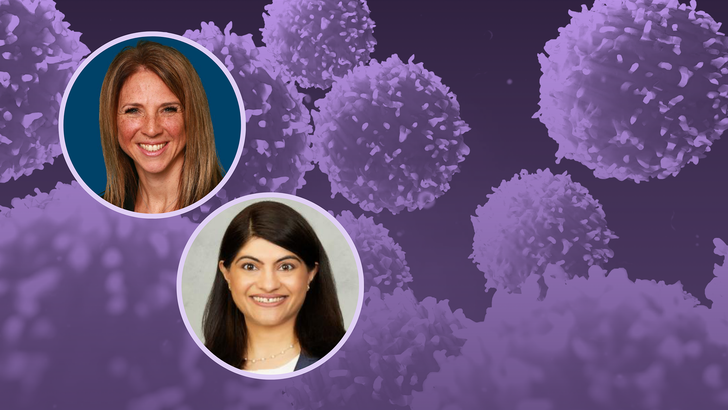
This is Project Oncology on ReachMD, and I'm Dr. Brian McDonough. Joining me to help answer this key question are Dr. Surbhi Sidana and Dr. Tara Graff.
In addition to being an Associate Professor of Medicine, Dr. Sidana leads the Myeloma CAR T and Immunotherapy program at Stanford Medicine.
Dr. Sidana, welcome to the program.
Dr. Sidana:
Thank you for having me.
Dr. McDonough:
And our second guest today is Dr. Tara Graff, who's the Director of Clinical Research at Mission Cancer + Blood. She also serves on the National CAR T-Cell Advisory Board for Multiple Myeloma.
Dr. Graff, it's great to have you with us as well.
Dr. Graff:
Thank you for having me.
Dr. McDonough:
So, let's start with the big picture, Dr. Sidana. How has BCMA-directed CAR T-cell therapy reshaped our approach to relapsed and refractory multiple myeloma?
Dr. Sidana:
BCMA CAR T-cell therapy has been absolutely revolutionary in the treatment of patients with relapsed/refractory myeloma. So, in patients with heavily treated myeloma, for the first time, we saw deep and durable responses lasting several years, whereas with conventional therapies, these patients might have only had a few months. And not only that—it also offers a treatment-free approach after the initial treatment of apheresis, bridging, and CAR T infusion.
Since then, from the late-relapse setting, we have moved this to the early-relapse setting, where CAR T-cell therapy has also demonstrated better PFS and even better overall survival compared to standard-of-care chemotherapy and offers a treatment-free interval. So, this has been absolutely revolutionary in the treatment of myeloma.
Dr. McDonough:
Now, as this therapy gains traction, Dr. Graff, what are some of the main barriers you're seeing to broader integration, especially in community settings?
Dr. Graff:
Well, that's a really good question. There are a number of key barriers. One, sometimes, can be limited access, just depending on where you are geographically. If you're in rural communities, you may not have access to these therapies, you live too far from a treatment center, or you don't even have transportation to get to a treatment center. That is one that sometimes is not necessarily fixable, or at least a readily available fix right away.
But what I'm seeing more lately is not just limited access, but sometimes the referral. So, we're not getting these patients referred soon enough to a treatment center. Now, is that lack of awareness on the community oncologist? Is it that patients who are with their community oncologist don't want to be referred to the CAR T center? They fear that maybe once they go, they won't come back. There's so many different levels to this. That's something that we’re investigating not just in myeloma, but in lymphoma too. These patients need CAR T-cell therapy, and we see that our percentages of patients who are actually getting to CAR T centers and getting their CAR T product is very low based on how many patients likely qualify for this treatment.
Dr. McDonough:
Given those barriers, Dr. Sidana, which team members play key roles in coordinating care and supporting patients throughout their journey?
Dr. Sidana:
Since many patients with myeloma get their treatment closer to home in community practice, it is very important to have good communication and a systems-based approach to communication between a patient's local oncologist and the CAR T referral center. One part is education of the local oncologists and hematologists to know the eligibility, pre-treatment workup, and long-term management when someone transitions back.
I think identifying patients who may be eligible for CAR T and timely referrals is very important as well as knowing what type of treatments to give and what to avoid right in the peri-CAR T period to set their patients up for success. Having dedicated care coordinators or nurse navigators who can help with that transition, since all physicians are always busy—we always have big panels—having other people in the team who can help patients navigate from the community side to the academic sites and communication between the two centers is key.
Dr. McDonough:
For those just tuning in, you're listening to Project Oncology on ReachMD. I'm Dr. Brian McDonough, and I'm speaking with Dr. Surbhi Sidana and Dr. Tara Graff about how we can integrate CAR T-cell therapy across academic and community settings for patients with multiple myeloma.
So, Dr. Graff, let's turn our attention now to care delivery models. Which approaches are showing promise in extending access to CAR T-cell therapy beyond academic centers?
Dr. Graff:
So, this is something that I've actively been a part of in the lymphoma space—setting up this “spoke-and-hub model” where the local site or the community site can't infuse the product, but maybe they can help with apheresis or with the lymphodepleting part of the treatment paradigm and then send the patient back for CAR T at the larger center. And then the larger center sends the patient back to their primary oncologist, so it's more of a multidisciplinary approach. It's not just your patient goes and doesn't come back for a month. So, I think we're seeing earlier return times.
Now, again, is this something that's possible in every site across the country? No, not right now, but I think we're seeing this more paired treatment paradigm evolve over time. Again, it can look different. Maybe it's helping manage the earlier stage part of the CAR T journey from obtaining the tests that can be done locally before the patient is transferred to the treating center or taking the patient back sooner and doing the follow-ups for labs, transfusion needs, and IVIG replacement if necessary. So, there's this joint partnership.
But, again, communication is also a big part of this. So, if you are going to have earlier return or if you're going to have joint treatment and management going on, you're going to need to make sure that you have great communication lines, and that's not always easy. So, I think having dedicated teams—cellular therapy teams, nurse navigators, nurses, and APPs that are involved in that continuum of care from the primary site to the treatment site and back to the primary site—I think it can be done. I personally have experience with this, and I've been doing this for years, and it's worked out very well. So, I think if we can elevate that to more practices across the country, that would be great.
Also, we're in the day and age of technology that’s very different. We have telemedicine, and we can do remote consults. A number of us are all on the same EMR, so records are more readily available. You don't have to wait for something to be faxed. So, I think that this can be done—we just have to do it. And I know it makes it sound super easy, but I've been doing it, so I know it can be done.
Dr. McDonough:
No, your perspective is very interesting and important.
Given the potential for acute toxicities, Dr. Sidana, how are post-infusion monitoring and safety protocols being adapted to support patients across different care environments?
Dr. Sidana:
So, there's different timelines for toxicities after CAR T. Cytokine release syndrome and acute neurological toxicities happen in the first couple of weeks. Over the long term, there might be some delayed immune toxicities, such as delayed neurotoxicities or other inflammatory syndromes. But mostly, beyond the first month is infections and low blood counts.
So, the first two weeks a patient is at the CAR T center, we are very focused on CRS and ICANS. Now, each center has different practices. Some people admit every patient and watch them inpatient; for us and many other centers, we are trying to move our patients to outpatient, either with daily visits or remote monitoring, especially for patients who might be at lower risk for severe CRS or ICANS events. And having a systems-based approach—you can manage the patient outpatient, but system when something happens, what's your system to get them admitted to the hospital or seen? I think that remains very important. And having someone 24/7 on call for us is really important for our patients to get ahold of us.
I think that educating our patients and the referring providers long term for not just infection prophylaxis to prevent infections, which is the largest contributor of non-relapse mortality, but what to do for IVIG prophylaxis, infection prophylaxis, and cytopenia management, and then also educating both the patient and the referring doctor for the rare toxicities, like colitis or delayed neurotoxicity—that is rare, one or two percent, but it can happen beyond the first months when patients transition back. And patients, at least for now, need to be referred back immediately to the CAR T center to manage.
I think cytopenias and infections can be managed locally, but with the others, time is of the essence. Acute intervention can often mean reversal of symptoms, but having standard protocols and education is very important.
Dr. McDonough:
Now, Dr. Graff, we know that effective communication is essential for success in complex care. So, what strategies are helping to bridge the gap between referring providers and CAR T centers?
Dr. Graff:
So, this is a good question. Again, I mentioned open communication earlier. So, there has to be structured communication, whether that's weekly touchpoints, weekly tumor boards, or care planning rounds, and maybe the physicians don't even have to be on, but the nurses, the nurse navigators, and the APPs, because in our clinic, and I think in most clinics, the APPs are kind of running that show. Patients come back—even patients who are receiving traditional weekly chemotherapy—they see the nurse practitioners and PAs for their lab checks and their ongoing management. So, I think communication with our ancillary staff is really, important. Again, I mentioned dedicated personnel who are assigned or in charge of these patients so that they know and they're educated on what to look for—making sure there are no signs of neutropenia or infections and that we don't have to have more acute management.
Again, I mentioned shared electronic medical records, which makes this very easy, but also checklists—I'm a big stickler for checklists. I started our cellular therapy program—you really minimize the things that can go wrong. It's not a perfect world; humans don't follow a perfect playbook. But if you have a checklist and you know patients are coming back from CAR T with this BCMA product, “These are the things that we have to watch for. We have to make sure we're checking this weekly and this biweekly. And if their IgG level falls below this, we have to do that.”
I think there are definite strategies with clear documentation and clear communication that really can overcome some of these barriers and allow more patients to be referred and then come back to their primary site for further and ongoing management.
Dr. McDonough:
Finally, Dr. Sidana, what key takeaways would you like to share with clinicians looking to prepare their practices or institutions for CAR T-cell therapy delivery?
Dr. Sidana:
To prepare your institution for CAR T-cell delivery, it's important to know that this is a multidisciplinary team approach. Yes, you need the hematologist/oncologist with the clinical expertise, but you also need a team around you. You need nurse navigators, and you need APPs to be able to see those patients multiple times a week when they need to be seen. You need a 24/7 call system. You need a hospital that supports you. And then, for cell therapy, you need a cell pharmacy for apheresis, shipping out, and handling the cells that are delivered.
And not only that, but you also need your colleagues who are infectious disease experts, GI experts, and neurology experts. When those complications happen, we often rely on our colleagues' expertise to help manage and even diagnose some of these complications. So, I think having a multidisciplinary team, educating everybody, and also, even if it's a community practice, always getting referrals from other practices—having that referral network and educating on when to refer and best practices before and after is very important. So, the education piece is critical.
Dr. McDonough:
Well, with those key takeaways in mind, I want to thank my guests, Dr. Surbhi Sidana and Dr. Tara Graff, for joining me to discuss how we can improve access to CAR T-cell therapy for patients with relapsed and refractory multiple myeloma.
Dr. Sidana, Dr. Graff, it was great having you both on the program.
Dr. Sidana:
Thank you for having me. I enjoyed our conversation.
Dr. Graff:
Thank you.
Announcer:
This episode of Project Oncology was sponsored by Bristol-Myers Squibb. To access this and other episodes in our series, visit Project Oncology on ReachMD.com, where you can Be Part of the Knowledge. Thanks for listening!